From Aerospace to Oil and Gas Discover the Power of Thread Rolling
Understanding Thread Rolling Services
What is Thread Rolling?
Thread rolling is a cold-forming process that creates threads on metal components through a series of dies. This method involves placing a metal workpiece between two rotating rollers, which impart the desired thread shape without removing material. The process efficiently forms threads on various types of metals, including steel, aluminum, and brass, and is widely used in manufacturing fasteners, bolts, and other critical components. Thread rolling stands out for its ability to produce high-precision threads with excellent surface finishes, making it a preferred choice in industries requiring stringent quality standards.
Benefits of Thread Rolling in Manufacturing
Thread rolling offers numerous advantages in manufacturing processes. First, it significantly enhances material strength since the process does not cut away material, but instead, it compresses the metal, aligning its grain structure. This results in a stronger thread compared to traditional machining methods. Second, thread rolling allows for high production rates, making it ideal for mass production scenarios. The rapid cycle times and minimal waste contribute to cost efficiency. Additionally, the process yields a superior surface finish that often requires no further grinding or machining, reducing overall manufacturing time and costs.
Comparison with Other Threading Methods
When comparing thread rolling with other threading methods, such as thread cutting and thread milling, several distinctions emerge. Thread cutting involves removing material to form threads, which can lead to significant waste and reduced tensile strength. In contrast, thread rolling preserves the integrity of the metal, offering greater durability. Thread milling, while versatile, often requires additional setups and can be slower compared to the high-speed capabilities of thread rolling. Each method has its place in manufacturing, but for high-volume production of strong, precise threads, thread rolling consistently proves to be the superior choice.
Applications of Thread Rolling in Key Industries
Aerospace Industry: Precision and Reliability
The aerospace industry demands the highest levels of precision and reliability, making thread rolling an essential process. Components such as aircraft fasteners, bolts, and fittings require stringent adherence to specifications due to safety concerns and performance standards. Thread rolling ensures that these fasteners maintain the necessary strength-to-weight ratio and surface quality. The aerospace sector often employs advanced materials that exhibit enhanced performance characteristics, and thread rolling adapts well to these materials, ensuring that components meet or exceed regulatory requirements. Manufacturers in this field rely on thread rolling services to deliver components that withstand the extreme conditions encountered during flight.
Oil and Gas Sector: Meeting Tough Standards
In the oil and gas sector, equipment and components must endure harsh environments and heavy loads. Thread rolling services play a pivotal role in producing high-strength fasteners and connectors used in drilling, extraction, and refining processes. The industry often utilizes specialized alloys that require precision machining to ensure structural integrity. Thread rolling provides the necessary strength and reliability while minimizing the risk of failure, which is crucial in high-stakes applications. Manufacturers serving this sector must adhere to strict industry standards, such as those set by the American Petroleum Institute (API), and thread rolling helps them achieve compliance by delivering high-quality, durable threaded components.
Military Applications: Strength and Durability
Military applications require components that can withstand extreme conditions, including high stress, temperature variations, and corrosive environments. Thread rolling services cater to this demand by providing robust, precision-engineered fasteners for military vehicles, weapon systems, and aerospace applications. The strength and durability of rolled threads contribute to the overall reliability of military hardware. Manufacturers in this space prioritize quality control and adherence to military specifications, ensuring that every threaded component fulfills its critical role in defense applications. The use of thread rolling technology helps enhance the performance and longevity of these vital components.
Technological Advances in Thread Rolling
CNC Thread Rolling: Revolutionizing Efficiency
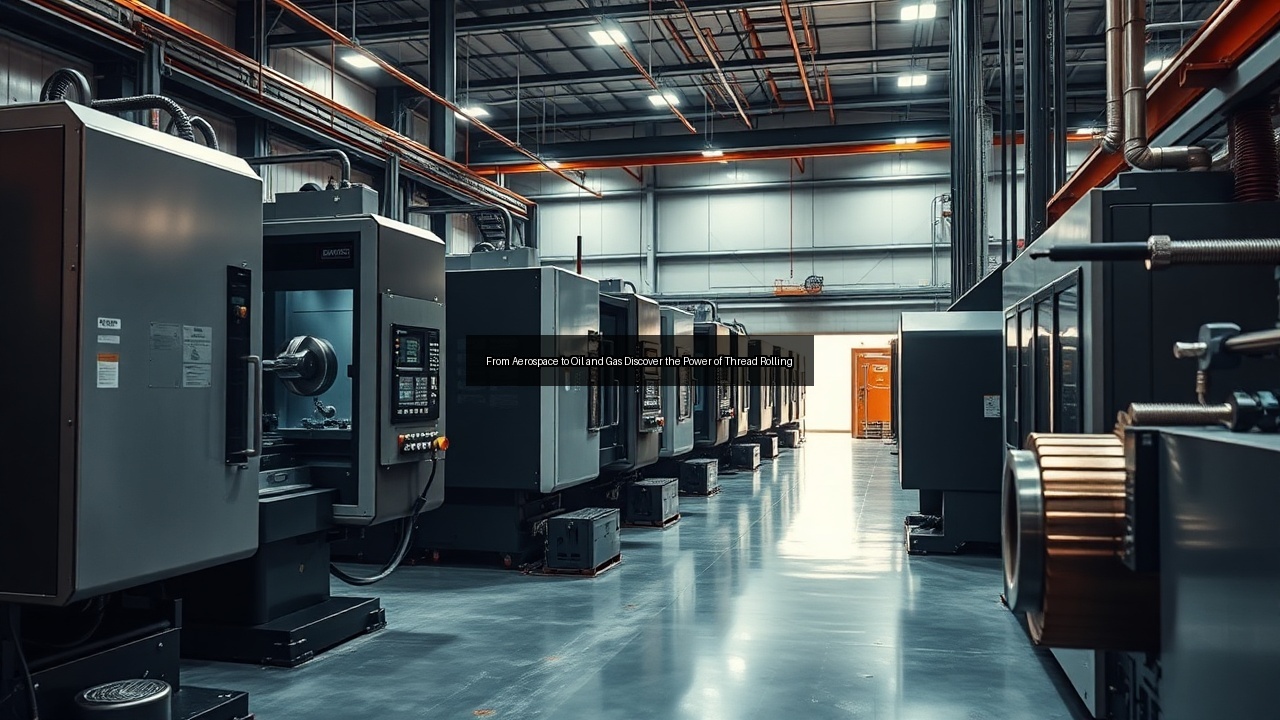
CNC thread rolling technology has transformed the manufacturing landscape by automating the thread rolling process. Computer Numerical Control (CNC) machines enhance precision and repeatability, allowing for intricate designs and complex thread patterns that would be challenging to achieve manually. This technology not only increases production rates but also improves quality control by minimizing human error. The integration of CNC with thread rolling services has enabled manufacturers to meet the growing demand for customized and high-volume production runs efficiently. As industries evolve, CNC thread rolling continues to set new benchmarks for speed and accuracy.
Integration of EDM and Thread Rolling
The combination of Electrical Discharge Machining (EDM) and thread rolling represents a significant advancement in thread manufacturing. EDM machining allows for the creation of intricate shapes and features that can be challenging to achieve through traditional methods. By integrating EDM with thread rolling, manufacturers can produce complex threaded components with high precision and improved surface finishes. This synergy of technologies opens new avenues for producing parts that meet stringent specifications in industries such as aerospace and oil and gas, where both complexity and reliability are paramount.
Future Trends in Thread Rolling Technology
Future trends in thread rolling technology focus on sustainability and innovation. The shift towards eco-friendly manufacturing practices drives the development of processes that reduce waste and energy consumption. Additionally, advancements in machine learning and artificial intelligence promise to further enhance thread rolling efficiency and quality control. Predictive maintenance and real-time monitoring systems are expected to become standard features in thread rolling services, allowing manufacturers to anticipate issues before they arise. As industries demand more sustainable and efficient production methods, thread rolling technology will continue to evolve, maintaining its position as a cornerstone of modern manufacturing.
Selecting the Right Thread Rolling Service Provider
Evaluating Manufacturers: Quality and Capability
Selecting a reliable thread rolling service provider involves evaluating their quality and capability. Manufacturers should assess the provider's experience in the industry, focusing on their track record with specific materials and applications. Certifications, such as ISO standards, can indicate a commitment to quality management. Additionally, reviewing client testimonials and case studies provides insight into the provider's ability to meet customer needs effectively. A capable manufacturer should also offer flexibility in production volume and the ability to accommodate custom designs, ensuring they can handle diverse project requirements.
Importance of Inventory Management in Thread Rolling
Effective inventory management plays a crucial role in the success of thread rolling projects. Manufacturers must ensure that they have the right materials on hand to meet production schedules and customer demands. A well-organized inventory system minimizes delays and helps manufacturers respond quickly to changes in demand. Providers that implement advanced inventory management systems can track materials and optimize supply chains, ensuring timely delivery of high-quality threaded components. This efficiency not only enhances customer satisfaction but also contributes to the overall competitiveness of manufacturers in the market.
Case Studies: Successful Thread Rolling Projects
Examining case studies of successful thread rolling projects reveals valuable insights into best practices and effective strategies. For instance, a manufacturer in Wisconsin successfully implemented CNC thread rolling technology, resulting in a 30% increase in production efficiency for aerospace components. Another case study highlights a collaboration between a thread rolling service provider and an oil and gas company, where advanced materials were used to create high-strength fasteners that met rigorous safety standards. Such examples illustrate the importance of innovation and collaboration in achieving successful outcomes in thread rolling services.